

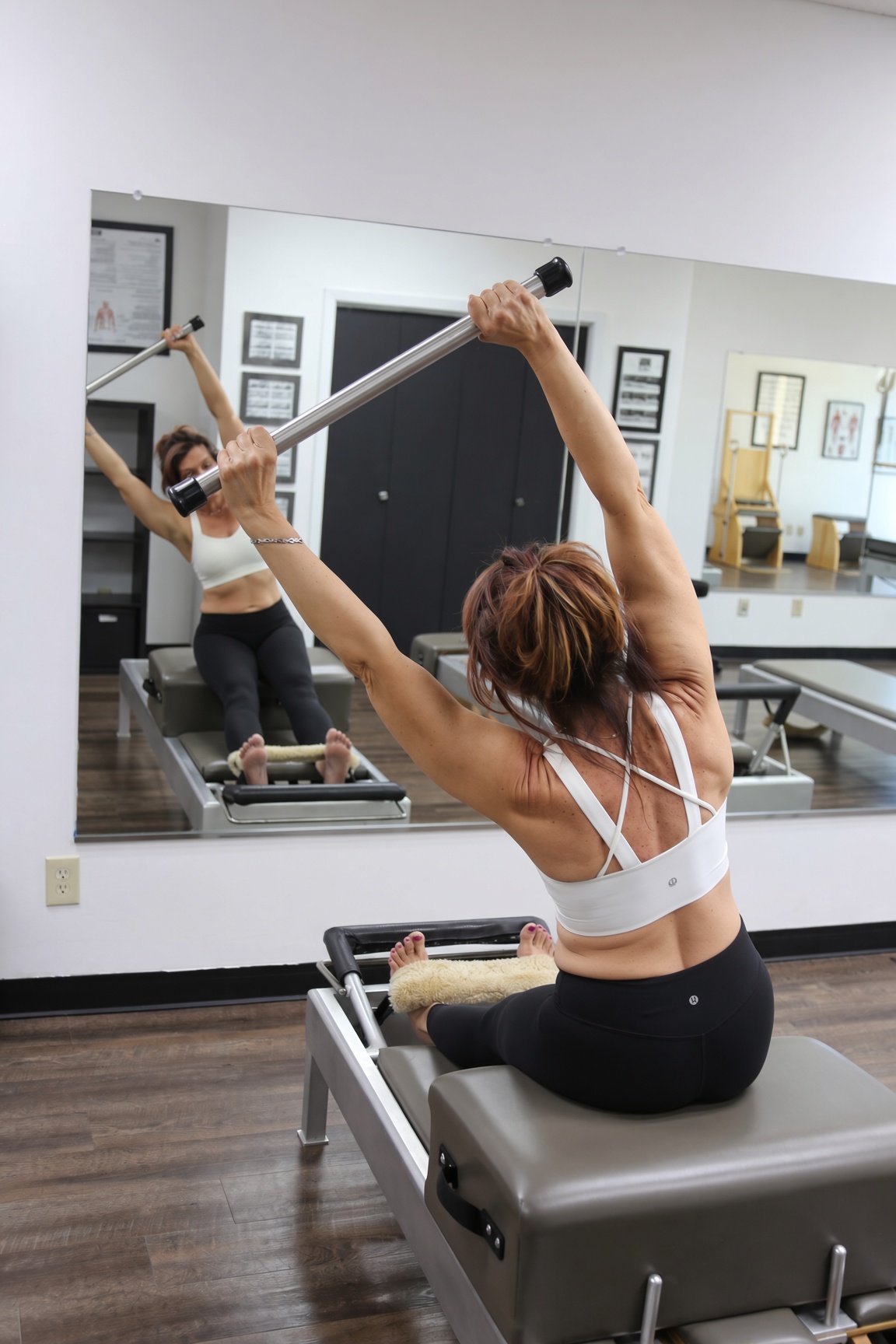
Injury Recovery Pilates Sessions for Pain Relief in Plano
Injury recovery is one of the most common reasons people find their way to Fit N Pilates. They have completed physical therapy. They have been cleared to return to activity. And yet — the pain persists, the movement quality has not fully returned, and they do not feel like themselves in their bodies.
This gap between medical clearance and full functional recovery is exactly where classical Pilates excels. It is not physical therapy — it is something that happens after physical therapy has done its job, rebuilding the movement architecture that injury disrupted at a deeper level than rehabilitation protocols typically reach.
Why the Post-PT Gap Exists
Physical therapy is designed to restore function to a level adequate for daily living and return to activity. It addresses the acute injury, manages pain, and rebuilds the strength and range of motion required to pass functional testing. What it is not designed to do is rebuild the full neuromuscular coordination, deep stabilizing function, and movement efficiency that prevent re-injury and restore pre-injury quality of life.
This requires time, progressive loading, and individualized attention that the PT model’s caseload typically cannot provide. Classical Pilates in a private session format provides exactly this — and Joseph Pilates designed much of his method specifically for this population.
Common Injury Recovery Cases We Work With
At Fit N Pilates, we regularly work with clients recovering from or managing: rotator cuff tears and repairs, knee replacements and ACL reconstructions, hip replacements, lumbar disc herniations and decompressions, spinal fusions, shoulder impingement and labral repairs, ankle reconstruction, and chronic conditions including osteoarthritis, osteoporosis, and spinal stenosis.
Each requires a different program — different starting points, different progressions, different areas of emphasis. What they share is the need for individualized instruction, progressive loading, and ongoing assessment by an instructor who understands both the classical method and the specific demands of each condition.
What to Expect in a Recovery-Focused Session
We begin every recovery client with a detailed intake: your medical history, the specific injury, surgical details if applicable, what PT addressed, what remains symptomatic, and what your goals are. We review any available imaging and medical documentation and communicate with your medical team when needed.
Sessions are built around where you actually are — not where you think you should be. The apparatus allows us to support and load the body precisely, and the classical sequence provides a clear progression from foundational stability through graduated functional strength. We observe, we correct, we advance — and we do not rush the process.
For clients with significant inflammatory pain or nutritional factors affecting recovery, a consultation at FitNVitality provides the clinical nutritional support that accelerates tissue healing and pain resolution.
Frequently Asked Questions
Can I do Pilates if I am still in pain?
Yes, in many cases — depending on the source and nature of the pain. Classical Pilates can be designed to work around painful areas while strengthening the supporting structures, and some clients find that specific Pilates exercises actually reduce their pain during the session and afterward. We always begin with what is comfortable and progress from there. If you have acute inflammatory pain, active infection, or a fracture that has not healed, we will advise you to wait for the appropriate medical clearance before beginning.
Do you work with clients who have osteoporosis?
Yes. Osteoporosis requires specific modifications — primarily avoiding deep flexion of the spine and loading positions that create excessive compression risk. Within those parameters, classical Pilates is excellent for osteoporosis: the weight-bearing and spring-resistance exercises stimulate bone density, improve balance and fall prevention, and maintain the muscle mass that protects bones from impact. We ask that clients with osteoporosis share their most recent DEXA scan results so we can design the program with appropriate parameters.
How is injury recovery Pilates different from regular Pilates sessions?
The method is the same — classical Joseph Pilates. The application is more conservative, more carefully monitored, and more specifically designed around the injury and its healing status. The starting point in the classical sequence is chosen based on what the body can do safely rather than a standard beginner protocol. Progression is more gradual and more frequently reassessed. Communication with the client about what they are experiencing in each exercise is more active. The goal is always full function — but the path is designed around the reality of where recovery currently stands.
If you are recovering from an injury and ready for the next phase of your recovery, schedule a session at Fit N Pilates in Plano, TX.
Fit N Pilates | Shannon Rene & Denee
2301 Ohio Dr, Suite 245, Plano TX 75093 | (214) 789-5563