Relieve Chronic Back Pain: How Classical Pilates Restores Your Core Strength
Chronic back pain is one of the most common reasons people find their way to Fit N Pilates. They have tried physical therapy, chiropractic care, massage, and various exercise programs — and found temporary relief at best. What they have not tried is building the deep postural muscles that are supposed to protect the spine in the first place.
That is what classical Pilates does. Not the mat class at the gym. Not the reformer circuit studio. Authentic classical Joseph Pilates — taught with precision, in the correct sequential order, on the full apparatus — systematically rebuilds the muscular architecture that chronic pain has eroded.
Why Most Back Pain Is a Core Problem
The spine does not support itself. It depends on a coordinated system of deep stabilizing muscles — the multifidus, transverse abdominis, pelvic floor, and diaphragm — to maintain alignment, distribute load, and absorb force. When these muscles are weak, inhibited, or firing in the wrong sequence, other structures compensate: the hip flexors shorten, the lumbar erectors chronically brace, and the discs and facet joints bear loads they were not designed to carry.
The result is chronic pain that does not resolve with rest or with surface-level strengthening. Crunches and planks engage the superficial abdominals — not the deep stabilizing system. Classical Pilates is specifically designed to activate and coordinate the deep core while teaching the spine to move with length and control.
What Classical Pilates Does That Other Exercise Cannot
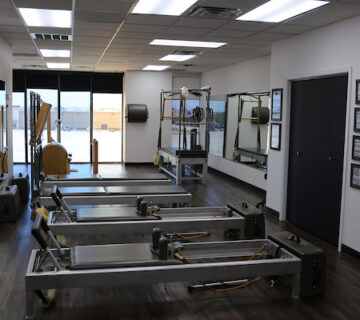
Joseph Pilates developed his method after years of anatomical study and work with rehabilitation patients. The exercises are sequenced deliberately — each one prepares the body for the next. The apparatus (reformer, cadillac, wunda chair, spine corrector, barrel) provides spring resistance and support that allows precise strengthening of the deepest stabilizing muscles before progressing to loaded movement.
At Fit N Pilates, our sessions are private or semi-private. This is not incidental — it is essential. A trained instructor observes every repetition and corrects the subtle compensations that would otherwise allow you to “do the exercise” while reinforcing the same imbalances causing your pain.
Denee, our lead classical Pilates instructor with 1,000+ hours of Romana Kryzanowska apprenticeship training, specializes in working with clients recovering from back injuries, disc issues, and chronic spinal dysfunction. Her precision with this population is exceptional.
What to Expect in Your First Session
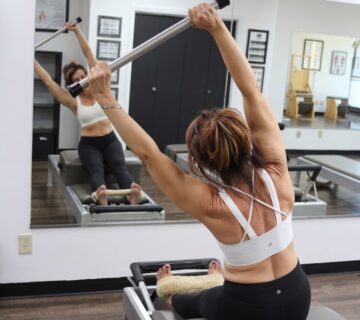
We begin every new client with an assessment of postural patterns, movement quality, and areas of restriction or compensation. From there your program is built around your specific needs — not a generic protocol. Clients with chronic back pain often start on the reformer and cadillac, where spring support allows correct muscle recruitment before bodyweight load is introduced.
For clients whose back pain has a nutritional or inflammatory component, I also recommend a consultation at FitNVitality. Chronic inflammation, nutritional deficiencies, and gut health issues all contribute to pain sensitivity and tissue recovery — and addressing them accelerates the results you get from Pilates.
Frequently Asked Questions
Is classical Pilates safe if I have a herniated disc?
Yes — when taught by a qualified classical Pilates instructor, Pilates is not only safe for herniated disc conditions but is frequently recommended by spine specialists and physical therapists. The key is working with someone who understands spinal biomechanics and modifies the program appropriately. We work with clients who have disc herniations, stenosis, and post-surgical spines regularly. We encourage you to share your imaging and medical history with us before your first session.
How many sessions before I notice improvement in my back pain?
Most clients with chronic back pain notice meaningful improvement within six to ten sessions, though this varies by how long the problem has been present and its severity. Joseph Pilates famously said you will feel a difference in ten sessions, see a difference in twenty, and have a new body in thirty. In our experience, this holds up. Consistency matters more than frequency — two sessions per week produces better results than one.
Can I continue my other exercise while doing Pilates for back pain?
In most cases, yes — though we may recommend modifications or temporary reductions in activities that are aggravating your symptoms. Walking is generally beneficial and complementary. High-impact activities, heavy lifting, and certain yoga postures may need adjustment depending on your specific condition. We will discuss your full exercise picture during your initial assessment and make recommendations based on what we observe.
If chronic back pain is limiting your life, classical Pilates may be the missing piece. Schedule a session at Fit N Pilates in Plano, TX.
Fit N Pilates | Shannon Rene & Denee
2301 Ohio Dr, Suite 245, Plano TX 75093 | (214) 789-5563